


Bittam markets itself as a cryptocurrency trading platform designed for global users, repeatedly emphasizing ease of access, flexible trading, and compliance credentials. While these claims appear attractive at first glance, a deeper investigation into the platform’s background, regulatory positioning, and operational transparency reveals a range of structural weaknesses and warning signs that warrant serious attention.
Short Operating History and Limited Verifiability
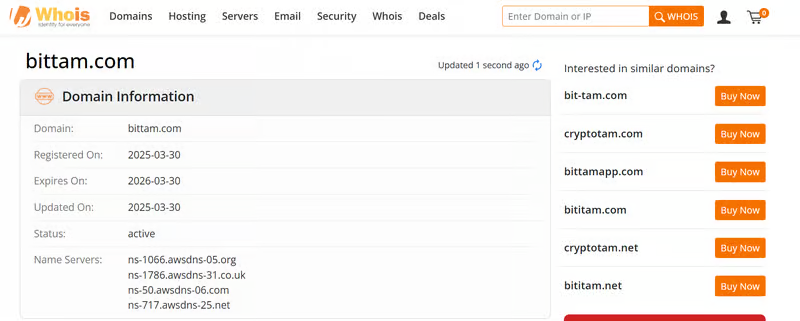
Public domain records confirm that bittam.com was registered on March 30, 2025. This places Bittam firmly in the category of newly launched platforms with no long-term operational record. Despite this, the platform presents itself as a global trading service, a positioning that is difficult to reconcile with its extremely limited online footprint and absence of historical data.
New platforms are not inherently illegitimate, but when combined with aggressive marketing claims and minimal disclosure, short operating history becomes a meaningful risk indicator.
Misleading Use of Regulatory Language
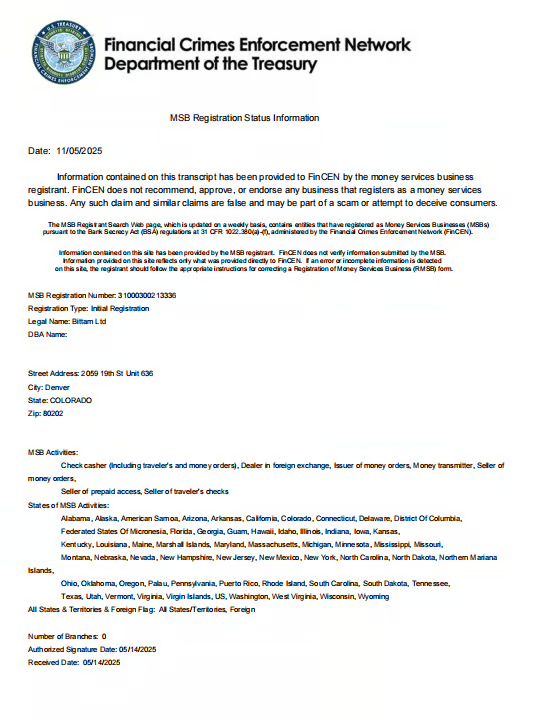
Bittam prominently references MSB registration in the United States, implying regulatory compliance and legitimacy. While MSB registration records can be found in the FinCEN database, it is critical to clarify that this registration is administrative in nature and does not authorize cryptocurrency exchange operations.
FinCEN explicitly states that MSB registration should not be interpreted as approval, endorsement, or supervision. Presenting MSB status as a sign of regulatory strength is a recurring tactic observed in platforms seeking to create a false sense of security among users unfamiliar with regulatory frameworks.
Lack of Trading System Transparency
The platform claims to offer a multi-device trading experience and encourages users to download its mobile applications. However, Bittam does not provide verifiable details about how trades are executed. There is no disclosure of order-matching logic, liquidity sourcing, execution models, or system audits.
This absence of technical transparency prevents users from understanding whether they are interacting with a real exchange environment or an opaque internal system. In regulated markets, such information is typically disclosed to some degree to support trust and accountability.

Incomplete Product Disclosure and Risk Parameters
Although Bittam lists mainstream cryptocurrencies as tradable assets, it does not disclose core trading parameters such as fees, leverage limits, liquidation rules, or margin requirements. These omissions are not minor oversights; they directly affect a user’s ability to evaluate financial risk.
Platforms that avoid detailing these parameters often retain unilateral control over pricing and settlement logic, which significantly increases counterparty risk.

Anonymous Operations and Weak Accountability
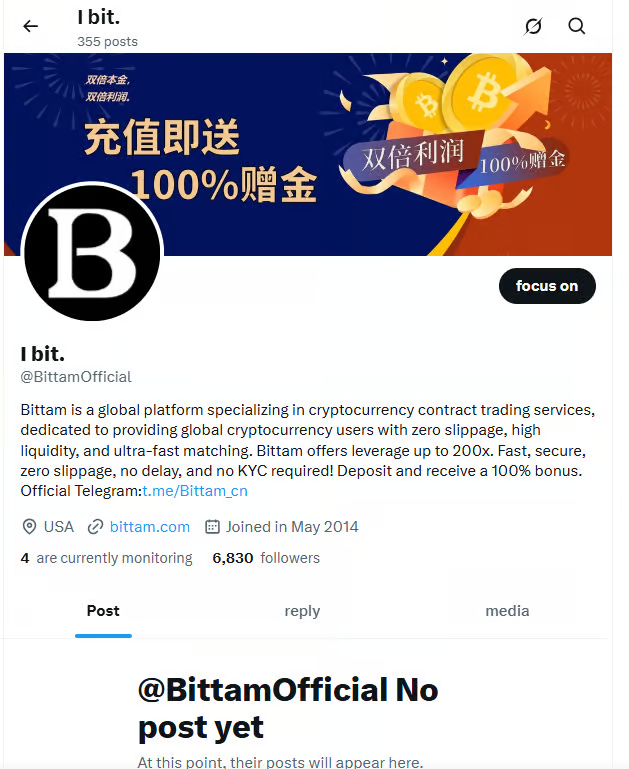
Bittam does not disclose a registered office address, corporate ownership, or executive team. Communication channels are limited, and there is no evidence of a structured customer support framework or dispute resolution mechanism.
The absence of identifiable operators or jurisdictional clarity severely limits users’ ability to seek accountability in the event of disputes or losses.
Conclusion
Taken together, Bittam exhibits multiple structural risk factors, including regulatory overstatement, lack of operational transparency, anonymous ownership, and incomplete product disclosure. While these elements do not independently prove fraudulent intent, their combined presence aligns closely with patterns commonly observed in high-risk or deceptive crypto platforms. Users should approach Bittam with extreme caution and avoid relying on marketing narratives as indicators of legitimacy.
FAQ
What is Bittam?
Bittam is an online platform that claims to provide cryptocurrency trading services and presents itself as a globally accessible crypto exchange.
When was Bittam established?
The domain bittam.com was registered on March 30, 2025, indicating that the platform is newly launched with no long-term operational record.
Is Bittam a licensed or regulated exchange?
Bittam refers to MSB registration in the United States. However, MSB registration does not grant authorization to operate a cryptocurrency exchange and does not imply regulatory supervision or approval.
What are the main structural risks of Bittam?
Key structural concerns include its very short operating history, lack of disclosed corporate ownership, absence of a registered business address, and limited transparency regarding its trading infrastructure.
Does Bittam disclose how its trading system works?
No. The platform does not provide information about its order-matching system, liquidity sources, execution model, or technical safeguards.
Are trading fees and leverage clearly explained?
No. Bittam does not clearly disclose trading fees, leverage limits, margin requirements, or liquidation mechanisms.
How transparent is Bittam’s company information?
Bittam does not publicly disclose its legal entity structure, executive team, or operating jurisdiction, which limits accountability.
Is Bittam suitable for risk-averse users?
Given the lack of transparency and regulatory clarity, Bittam may not be suitable for users who prioritize safety, accountability, and regulatory oversight.