

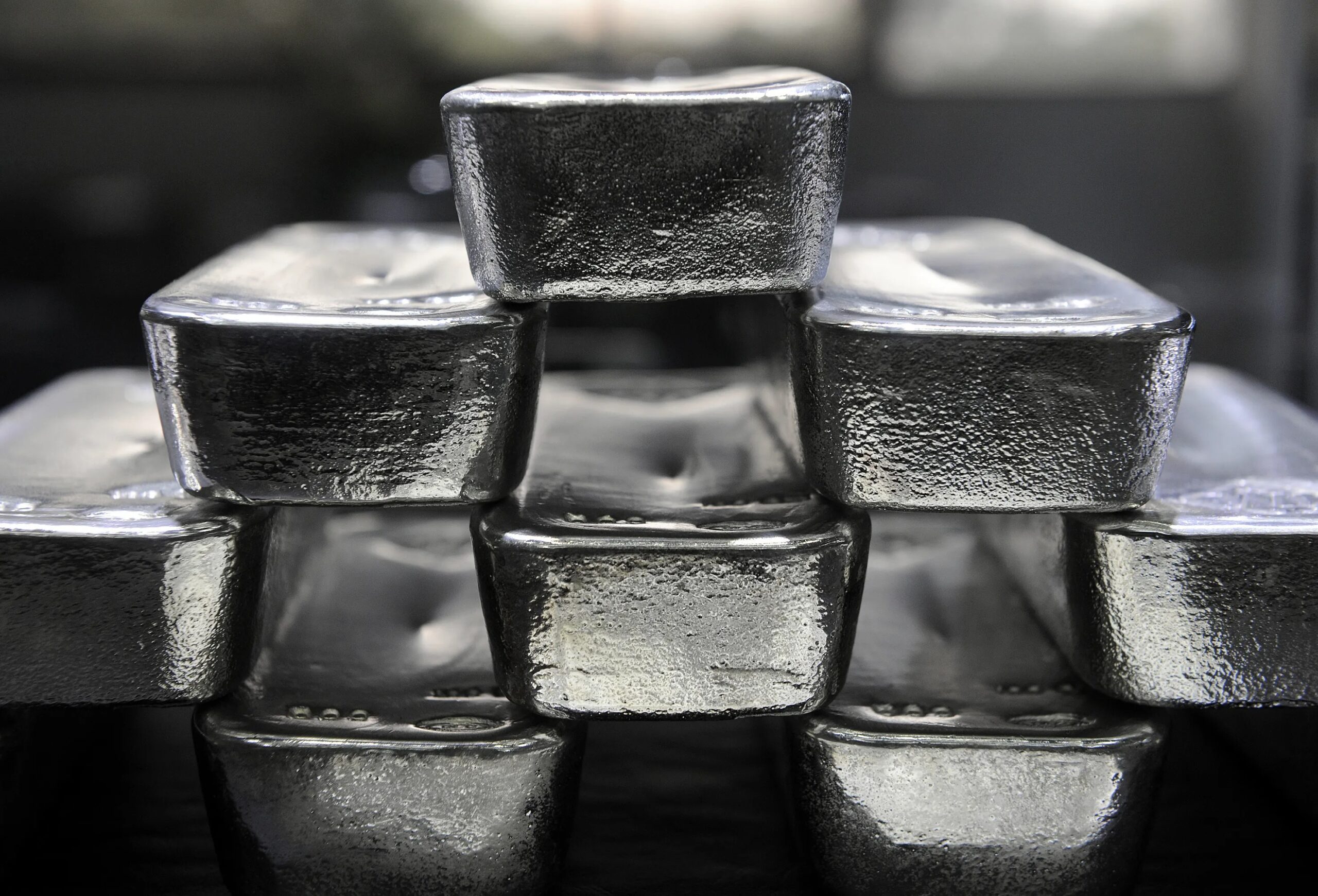
Silver prices extended their violent reversal on Thursday after January’s speculative surge gave way to a cascade of forced liquidation, with the latest leg down driven by a stronger U.S. dollar, thin liquidity, and risk controls tightening across futures markets. Spot silver fell 12.4% to about $77/oz, while spot gold slid 1.7% to roughly $4,876/oz as the broader sell-off rippled across commodities and risk assets.
The move is not just a “silver story.” It is a case study in how leveraged positioning, exchange margin changes, and cross-market de-risking can turn a crowded trade into a disorderly unwind—repricing volatility across precious metals, reshaping hedging behavior, and forcing traders to reassess what “safe haven” means when liquidity is the constraint.
The Spark: A Retail-Fueled Surge Meets a Structural Tripwire
The chain reaction began with silver’s extraordinary run-up into late January, when the metal’s smaller market size and higher beta (vs. gold) made it prone to momentum chasing and squeeze dynamics. Reuters noted that silver had been in a “self-propelled frenzy,” with analysts warning that once cracks appeared they could become “chasms.”
Silver then peaked near $121.64/oz before the reversal accelerated—an all-time-high print that became a reference point for stop-loss triggers and systematic deleveraging. The macro backdrop amplified the fragility: a stronger dollar (and shifting expectations around U.S. policy) increased the headwind for dollar-priced metals, while risk sentiment weakened across multiple asset classes.
In plain terms, the rally created a setup where price itself became the catalyst: higher prices drew in leveraged longs, leverage created sensitivity to volatility, and volatility made the position unstable.
The Mechanics of the Selloff: Margin, Liquidity, and Forced Deleveraging
What transformed a sharp pullback into a rout was the market’s plumbing—specifically margin dynamics and liquidity conditions.
As prices fell, exchanges and clearinghouses raised margin requirements, increasing the cash needed to hold futures positions. Reuters reported that selling in precious metals accelerated after CME Group hiked margins on metal futures, reinforcing the downward momentum by forcing some participants to reduce exposure.
At the same time, stress in parts of the Chinese silver complex appears to have added fuel. Reuters market coverage noted dealer talk that pressure on certain silver futures funds in China contributed to the rout and was worsened by the margin changes.
A fictitious but realistic clearing-focused takeaway:
“In a leveraged market, margin is the hidden accelerator,” said Daniel Ko, a derivatives risk manager at a global broker (fictitious). “When margins rise into falling prices, it turns voluntary selling into mandatory selling.”
This is why silver can fall fast even when the longer-term narrative (industrial demand, energy transition, geopolitics) hasn’t changed overnight. In a liquidation phase, flows dominate fundamentals.
Winners and Losers: How One China Desk Profited While the Crowd Panicked
One of the most striking side-stories is that not everyone was caught wrong-footed. The Financial Times reported that Zhongcai Futures netted more than $500 million from the silver rout by building a major short position on the Shanghai Futures Exchange—equivalent to about 484 tonnes of silver (roughly $1.5 billion in value).
That detail matters for market structure. It signals:
- More price discovery gravity shifting East, as large positions and liquidity increasingly sit in Asian venues.
- A reminder that “retail frenzy” phases often coexist with sophisticated hedgers/speculators positioned the other way—until the unwind exposes who was levered and who was patient.
What This Means for the 2026 Outlook: Higher Volatility, Tighter Risk Controls, Wider Spreads
Looking forward, the most durable impact is likely regime change in volatility rather than a simple “bounce or no bounce” debate.
- Expect wider intraday ranges and more violent squeezes. Reuters’ latest analyst poll shows forecasts for both metals have been revised sharply higher, reflecting the market’s new baseline: gold’s 2026 median forecast rose to $4,746.50/oz, while silver’s average 2026 forecast increased to $79.50/oz—but analysts also explicitly warned about volatility risks.
- Exchange risk settings will matter more than headlines. In metals, a single margin change can reshape positioning faster than a macro data release. Traders should treat margin updates, open interest shifts, and liquidity conditions as “first-order” variables—especially when price action becomes disorderly.
- Cross-asset spillovers are back. When liquidation hits, investors often sell what they can, not what they want. Reuters described a broader risk-off tone alongside the metals drop, reinforcing that precious metals can become a source of funding rather than a haven during stress.
Bottom Line: What to Watch Next
Silver’s crash is a reminder that market impact is often driven by leverage and liquidity, not just the macro narrative. In the days ahead, watch margin policy changes, fund redemptions/positioning signals, and whether gold stabilizes as volatility cools—or continues to trade like a “risk asset” when forced selling dominates.